
Gastropexy in Dogs: What Jacksonville, TX Dog Training Clients Should Know Before Bloat Strikes

If you've watched a hard-charging retriever bolt across a field after a downed bird, you already know these dogs eat, drink, and move with the same intensity they train with, and that intensity carries real risk.
Gastric dilatation-volvulus, better known as bloat or GDV, is a sudden, life-threatening emergency that disproportionately affects deep-chested, high-drive breeds built for hunting and field work.
For Jacksonville, TX dog training clients raising a working retriever, understanding gastropexy matters just as much as building a solid retriever training program.

What Is a Gastropexy?
A gastropexy, sometimes called a stomach tack, is a surgical procedure that attaches the stomach to the body wall. A normal stomach moves quite freely within the abdomen, which is part of what allows it to twist and cut off blood flow during a bloat episode.
After a gastropexy, the stomach is secured in place. It can still fill with gas or food, but it is far less likely to flip. The procedure does not prevent bloat itself, but it does target the twisting that turns bloat into an emergency.
The Potential Pros of Gastropexy
Reduces the Risk of GDV
Veterinary research shows that gastropexy dramatically reduces the odds of a stomach flipping, even in dogs that go on to bloat later in life, since this can happen in roughly 1 in 5 at-risk dogs that never undergo a prophylactic gastropexy.
Can Be Life-Saving for High-Risk Dogs
Deep-chested breeds, dogs with a family history of GDV, fast or anxious eaters, and dogs that have already bloated once stand to benefit most. The same traits that make a great retriever, drive, food motivation, a deep chest built for swimming, also raise its risk.
It Can Be Paired with Spay or Neuter
Many veterinarians recommend performing a gastropexy alongside a spay or neuter, since the dog is already under anesthesia. Combining the two means one anesthesia event and one recovery period instead of two separate procedures, lowering overall surgical risk and cost.
The Potential Cons and Concerns
It Is Still Surgery
A gastropexy is a real surgical procedure, with anesthesia risk, a recovery period, scar tissue, and potential complications. It should never be treated as a minor add-on.
A False Sense of Security
Because gastropexy prevents twisting rather than bloat itself, a tacked stomach can still fill with gas and become distended. Owners need to know the signs of bloat in dogs regardless of whether their dog has had the procedure.
Not Every Dog Needs It
Opinions vary within the veterinary community, and gastropexy may be overused in lower-risk breeds. Day-to-day management still matters for every dog, tacked or not.
What Gastropexy for a Working or Field Dog
Deep-chested retrievers and gun dogs are exactly the profile many veterinarians flag as higher-risk, worth discussing before your dog is deep into a gun dog training program.
If your dog has had a gastropexy, full healing should be confirmed by your veterinarian before resuming steady corrections during collar work or intensive water work, since pushing a recovering dog too soon risks complications.
For active, working dogs, feeding and water management around training deserve real attention:
- Use slow-feed bowls or puzzle feeders for fast eaters
- Avoid large meals right before or after hard exercise
- Space water intake around training and hunting sessions
- Watch closely after high-stress days, such as trial days or kenneling

Talk to Your Vet and Your Jacksonville, TX Dog Training Team
Deciding on a gastropexy is a conversation between you and your veterinarian, one that factors in breed, risk history, and your dog's individual health. For working and field dogs, that conversation fits naturally alongside your training plan.
If you are building a program for your retriever and want guidance on balancing conditioning with health awareness, contact our team!

What Is Puppy Imprinting and Why Does It Matter for Gun Dogs?
Puppy imprinting shapes confident, trainable dogs early on. Discover expert dog training in Dallas, TX — contact us today!
Read more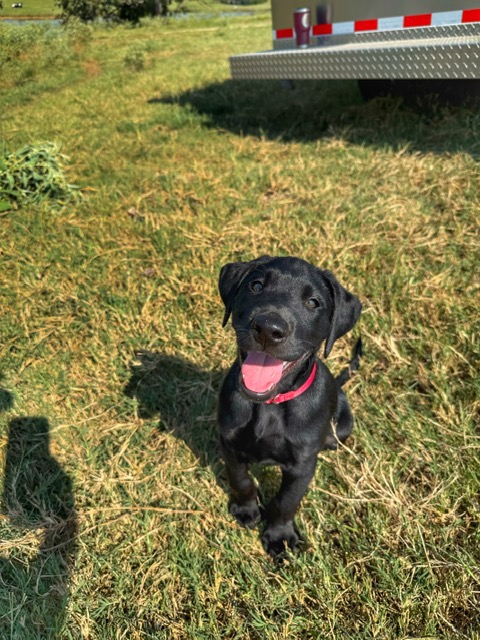
Raising a Puppy vs. Raising an Older Dog: Why Training Should Evolve with Age
Raise a confident, well-behaved dog with trusted Tyler TX dog trainers. Contact One Shot Retrievers today to schedule professional training!
Read more
Why Indirect Pressure Is the Best Approach for Dog Training
Discover why indirect pressure creates reliable obedience through professional dog training in Tyler, TX. Contact One Shot Retrievers today!
Read more


